Global Ratings
The strategy is written. Who can deliver it?
The 2026 GDS-Index shows destinations arriving at a turning point. The planning work that defined the past decade is now close to universal, and the harder work of delivery is where progress will be won or lost.
of destinations assessed in both years improved their score
14.5
percentage points between the Top 10 and the index average, down from 20.3
growth in average performance since 2016
index average, the highest recorded
Insights
1. Progress broadens as the bar keeps rising
Nine in ten destinations improved this year, and the gap between the leading ten and the wider field narrowed for the third year running, from 20.3 percentage points to 14.5.
Two groups, one axis
2. The strategy is written. Now comes delivery
More than nine in ten cities have climate mitigation and adaptation strategies (91.8%), greenhouse gas commitments (92.4%) and biodiversity strategies (90.5%). Almost every city has a 2030 emissions target, but only 6% can show full delivery against one.
3. Destination management is accelerating
The fastest movement is in what destinations control directly. Destination Management rose 6.2 percentage points and Supplier 5.1, against 3.5 for Social and 2.6 for Environmental. The role of the DMO is shifting from promotion to management.
Dark = what a DMO controls.
Venues
Hotels
Agencies
4. Certification marks how far a destination has come
Certification rises with position in the index. Inside the Top 40, 81% of assessed convention venues, 66% of qualifying hotel rooms and 50% of event agencies are certified. Outside it, 58%, 48% and 22%. Agencies moved fastest this year, up 8.1 points.
5. Crisis readiness is becoming embedded
Two in three destinations now have a documented crisis management plan covering preparedness, response and recovery, with 68% holding external communication protocols, 67% internal protocols and 62% a documented risk assessment.
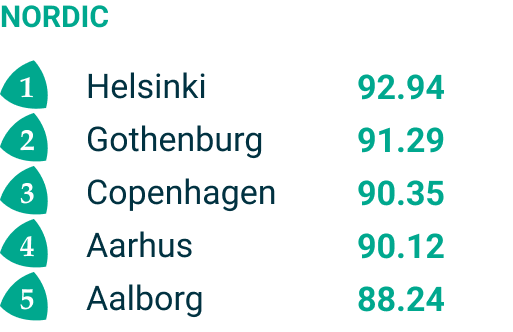
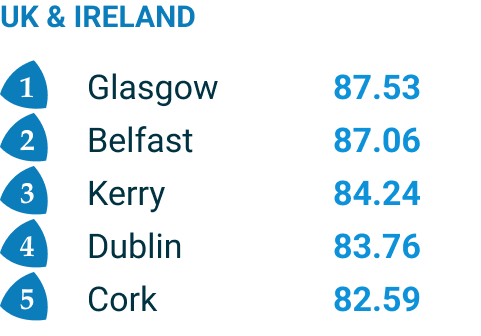
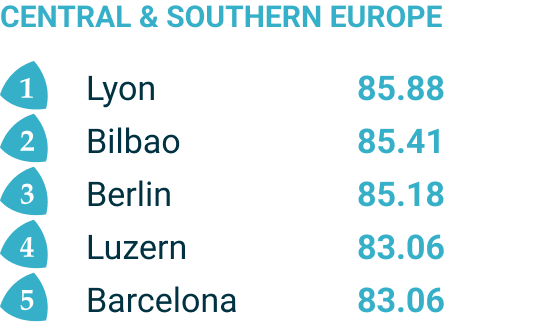
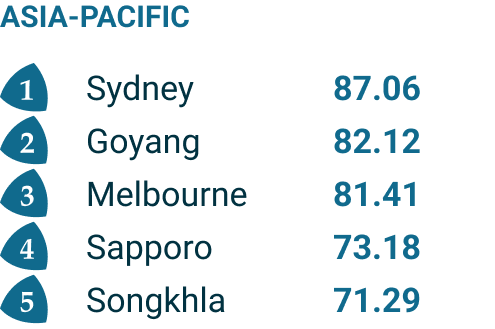
Leaders by Region