
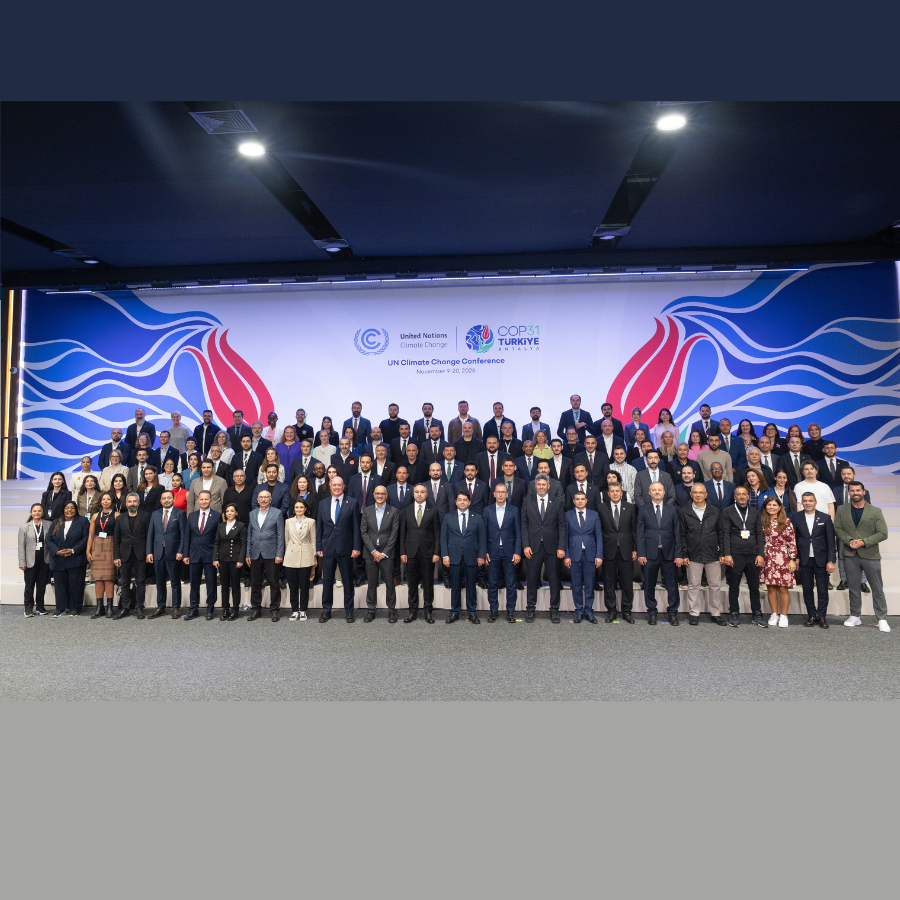
COP31: Sometimes Saying No is the Beginning of Progress
When is “no” a mindset shift? After COP31, here are five priorities for destinations and events, backed by climate risk data.
3 Views
Written by Guy Bigwood, CEO and Chief Changemaker, GDS-Movement

UN Secretary-General António Guterres meets with Indigenous Peoples © UN Climate Change – Kiara Worth
COP31 ended without an overarching agreement. Having witnessed the disappointment of COP15 in Copenhagen, I believe failure can also catalyse change. What matters now is how we respond.
I was at COP15 in Copenhagen in 2009, managing the sustainability programme for the summit. I remember the disappointment when negotiations collapsed and the summit was widely declared a failure.
Yet Copenhagen helped catalyse a new phase of climate action, contributing to the momentum that eventually delivered the Paris Agreement in 2015.
Sometimes progress requires the courage to say no. To draw a red line in the sand (perhaps in Saudi). To refuse an agreement that weakens commitments already made.
That is how I interpret the breakdown at COP31 in Antalya.
After two weeks of negotiations, nearly 200 countries failed to agree on the Antalya Pact. Countries demanding recognition of the need to transition away from fossil fuels faced resistance from major producers, including Saudi Arabia and Russia.
Countries had already committed to transitioning away from fossil fuels at COP28 in 2023.
Climate finance was another dividing line. Developing countries demanded greater support to adapt, build resilience, and transition to cleaner economies.
The negotiations exposed deep geopolitical divisions and weaknesses in the UN’s consensus-based process. Yet, refusing a weak agreement may help catalyse something stronger.
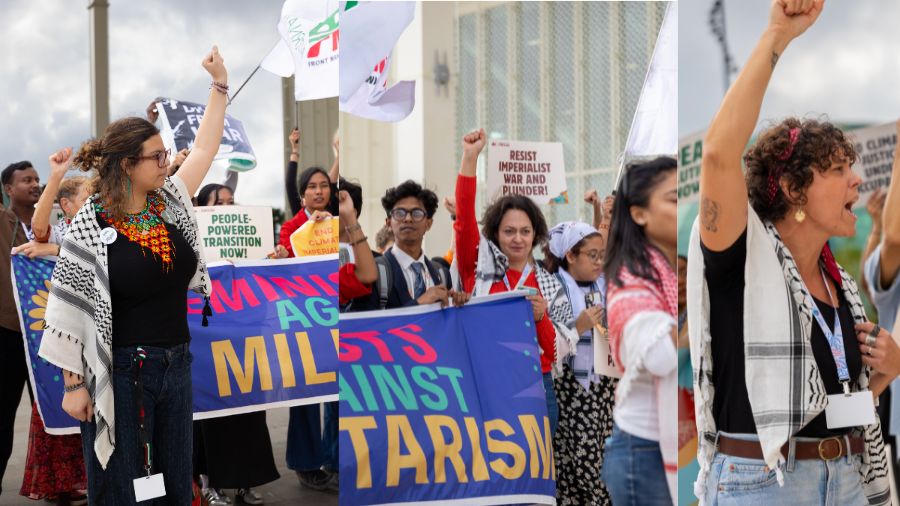
Members of civil society demonstrate in the corridors © UN Climate Change – Kubilay Ciftci
The Courage to Challenge the System
One of the most powerful interventions came from Panama’s environment minister, Juan Carlos Navarro.
Announcing that countries were pursuing a separate fossil fuel treaty, he challenged the influence of the petroleum industry:
“We are in love with our kidnappers.”
These are some of the initiatives that caught my attention at COP31, but I am sure there were others worth celebrating.
What announcements, partnerships, or commitments inspired you? What other initiatives should we be highlighting?
Please share your thoughts and examples in the comments. There is real value in amplifying the positive action happening across our industry.
Sometimes saying no is necessary. What matters is what we do next.
We can still be architects of the future.
His words captured the frustration of countries facing escalating climate impacts while negotiations struggle to address their causes.
The emerging treaty coalition offers hope that countries willing to lead can build new alliances and accelerate action together.
Climate Risk: Every Fraction of a Degree Matters
COP31 also confronted the prospect of overshooting the Paris Agreement’s 1.5°C temperature goal.
The newly published Destination Climate RiskScan: First Global Results, developed by Travel Forward, Risklayer, and CELTH, examines climate pressures across 2,588 destinations in 263 countries and territories.
Its findings are striking.
- By 2050, 36% of destinations could face rising climate hazard exposure alongside deteriorating conditions for common tourism activities under moderate emissions. Under high emissions, that figure rises to 62%.
- Crucially, by 2080, the projected median increase in climate hazard exposure is almost halved under moderate rather than high emissions.
These scenario-based findings demonstrate why mitigation matters.
I am increasingly concerned by a shift across our industry towards adapting to climate change while losing some urgency to prevent further damage.
Adaptation is essential. We must prepare for the changes unfolding, but mitigation must advance with equal determination.
Every fraction of warming we avoid matters.
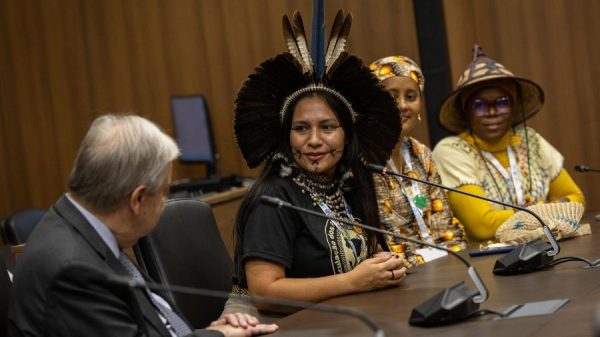
Bilateral Meetings with the UN Secretary-General
Beyond The Negotiations: Reasons For Optimism
Despite the political deadlock, several initiatives demonstrated continued momentum.
- Electrification and clean energy. The COP31 Electrification Delivery Package brought together more than 260 businesses and 37 cities. Participating utilities announced annual investment plans of at least $156 billion for electricity grids, renewables, and storage.
- Coastal regeneration. WTTC, Iberostar, Intrepid Travel, and the Ocean & Climate Platform announced the Ocean Catalyst Group and Coastal Tourism Playbook to advance ecosystem restoration, resilience, and community benefits.
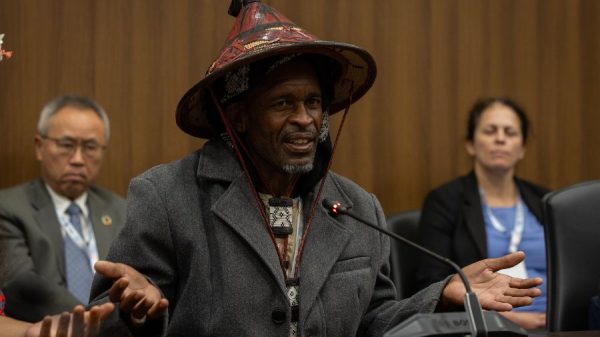
Bilateral Meetings with the UN Secretary-General (2)
- Regenerative food systems. UN Tourism, the TUI Care Foundation, and the University of Cambridge presented the draft 2040 Impact Roadmap for Sustainable Food Systems in Tourism. It proposes pathways for local sourcing, food redistribution, circularity, and reducing food waste.
- Regenerative climate action. UN Tourism’s briefing paper, Regenerative Approaches to Climate Action in Tourism, supports the evolution of the Glasgow Declaration on Climate Action in Tourism, including greater emphasis on adaptation and resilience. It outlines seven regenerative approaches connecting emissions reduction, climate adaptation, ecosystem restoration, inclusive governance, and community well-being. This reinforces the importance of integrating mitigation, adaptation, and regeneration across tourism’s climate action agenda.
- Simpler carbon measurement. ETOA and USTOA launched TEMPO, a free framework designed to make tour emissions measurement more accessible, consistent, and actionable.

Bilateral Meetings with the UN Secretary-General (3)
These initiatives demonstrate how collaboration can translate ambition into practical solutions. Their success will depend on investment, implementation, and measurable outcomes.
Five Priorities for Destinations and Events
Tourism and events connect many of the systems that must change: transport, energy, food, resource use, and nature. This creates significant opportunities for it to accelerate transformation.
COP31 reinforces five priorities for our industry.
- Lead with courage and turn commitments into results. Strong leadership is critical. Challenge established practices, mobilise partnerships, and translate ambitious goals into funded programmes with measurable impact.
- Integrate mitigation, adaptation, and regeneration. Reduce emissions while strengthening resilience, restoring ecosystems, and benefiting communities.
- Make climate risk a strategic priority. Use evidence to guide destination development, infrastructure, investment, and long-term planning.
- Mobilise investment and innovation. Build partnerships around clean energy, sustainable mobility, circular food systems, and nature-based solutions.
- Use events to accelerate transformation. Design congresses, festivals, and business events to catalyse innovation, strengthen partnerships, and create lasting positive legacies.

Around the butterfly garden © UN Climate Change – Kiara Worth
What Did We Miss?
hese are some of the initiatives that caught my attention at COP31, but I am sure there were others worth celebrating.
What announcements, partnerships, or commitments inspired you? What other initiatives should we be highlighting?
Please share your thoughts and examples in the comments. There is real value in amplifying the positive action happening across our industry.
Sometimes saying no is necessary. What matters is what we do next.
We can still be architects of the future.