The GDS-Index is a destination-level programme that measures, benchmarks, and improves the sustainability strategy and performance of tourism and events destinations.
The GDS-Index is aligned with international standards; UN SDGs, GSTC Destination Criteria, UNWTO.
Click here to read more about the benchmarking methodology including data collection and verification, the four benchmarking categories, governance and criteria development and performance scoring methods.
This page highlights each destinations sustainability journey and will showcase their journey.
Performance Overview
Here is the total score and the score for the four categories for this destination.
Total
0%
Environmental
Social
Supplier
Destination Management Organisation
Environmental
Includes a city's performance pertaining to its policies and infrastructure, such as climate change commitment, carbon emissions, renewable energies, resource and water management, public transport, and air pollution levels.
Social
Indicates the performance of the city against indicators of SDG integration, Corruption, Personal Safety, Access to Information and Communications, Health and Wellness, and Inclusivity, using external sources such as the Social Progress Imperative Index, and Corruption Perceptions Index.
Supplier
Addresses the sustainability commitment and performance of the local meetings' industry supply chain, including airports, events agencies, hotels, venues, and restaurants.
Destination Management Organisation
Indicates the sustainability commitment, including questions pertaining to maturity of a destination's sustainability and regeneration strategy, leadership, communication of sustainability initiatives (to support client planners), and the accuracy of their reporting on sustainability operations.
Sustainability Journey
Summary
Environmental
Supplier
Social
As Germany’s capital, Berlin is advancing sustainable, city-compatible tourism and events through a destination management approach that balances economic resilience, climate action, social inclusion, and quality of life for residents and visitors. The city’s tourism development is guided by long-term frameworks such as the Sustainable and City-Compatible Tourism Plan and supported by visitBerlin’s role as the official DMO. visitBerlin translates this ambition into action through Sustainable Berlin, a sector-specific sustainability initiative for tourism and event businesses. Its criteria catalogue is recognised by the Global Sustainable Tourism Council and covers governance, environment, society, and economy. The programme supports companies in building sustainability management structures, increasing transparency, and becoming part of a destination-wide partner network. Berlin’s approach is continuously evolving through strategic projects such as the Climate Roadmap for Berlin tourism and the MICE industry, strengthened monitoring and reporting structures, accessibility initiatives, and collaborative formats including the Berlin Paper 2025 for future-oriented large-scale events. Together, these activities make sustainability a shared, measurable, and continuously developing principle of Berlin’s visitor economy.
Does visitBerlin have a Sustainability Strategy?
Does Berlin have a sustainable destination certificate?
Does visitBerlin report on its sustainability performance?
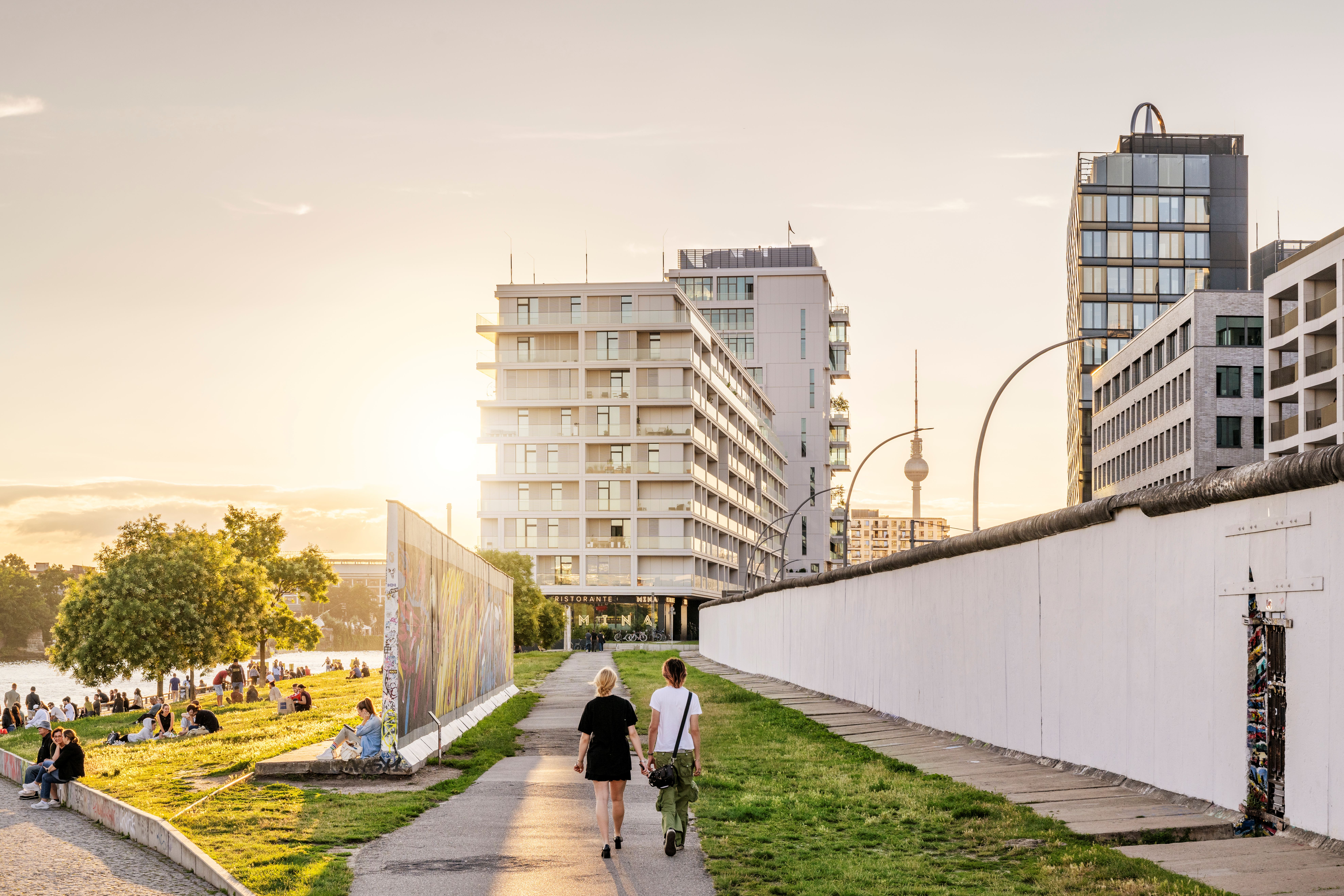
Berlin is internationally recognised as a green and climate-conscious metropolis. Around 2,500 public green and recreational spaces, extensive urban forests, and blue corridors of rivers, canals, and lakes contribute to climate resilience, biodiversity, and a high quality of life for residents and visitors. The city has set the legally anchored goal of becoming climate-neutral by 2045, with interim targets to reduce CO₂ emissions by 70 percent by 2030 and at least 90 percent by 2040 compared with 1990 levels. The Berlin Energy and Climate Protection Programme 2030 is the city’s central instrument for implementing climate action across sectors such as energy, buildings, economy, and transport. For tourism and events, visitBerlin is complementing these city-wide policies with the Climate Roadmap for Berlin tourism and the MICE industry, developed in a participatory process and presented publicly in December 2025. The roadmap is designed to provide strategic guidance, strengthen the sector’s data basis, and identify mitigation and adaptation pathways that contribute to Berlin’s climate neutrality goal. Berlin also supports more sustainable visitor behaviour through its dense public transport system, expanding cycling infrastructure, walkable neighbourhood experiences, and communication around climate-friendly travel options. These measures position environmental sustainability not as an add-on, but as a core element of Berlin’s destination development.
21%
OF ELECTRICITY
FROM RENEWABLES
70%
THE CITY’S
2030 CARBON
REDUCTION TARGET
862 ha
HECTARES OF GREEN
AREA PER 100 000
POPULATION
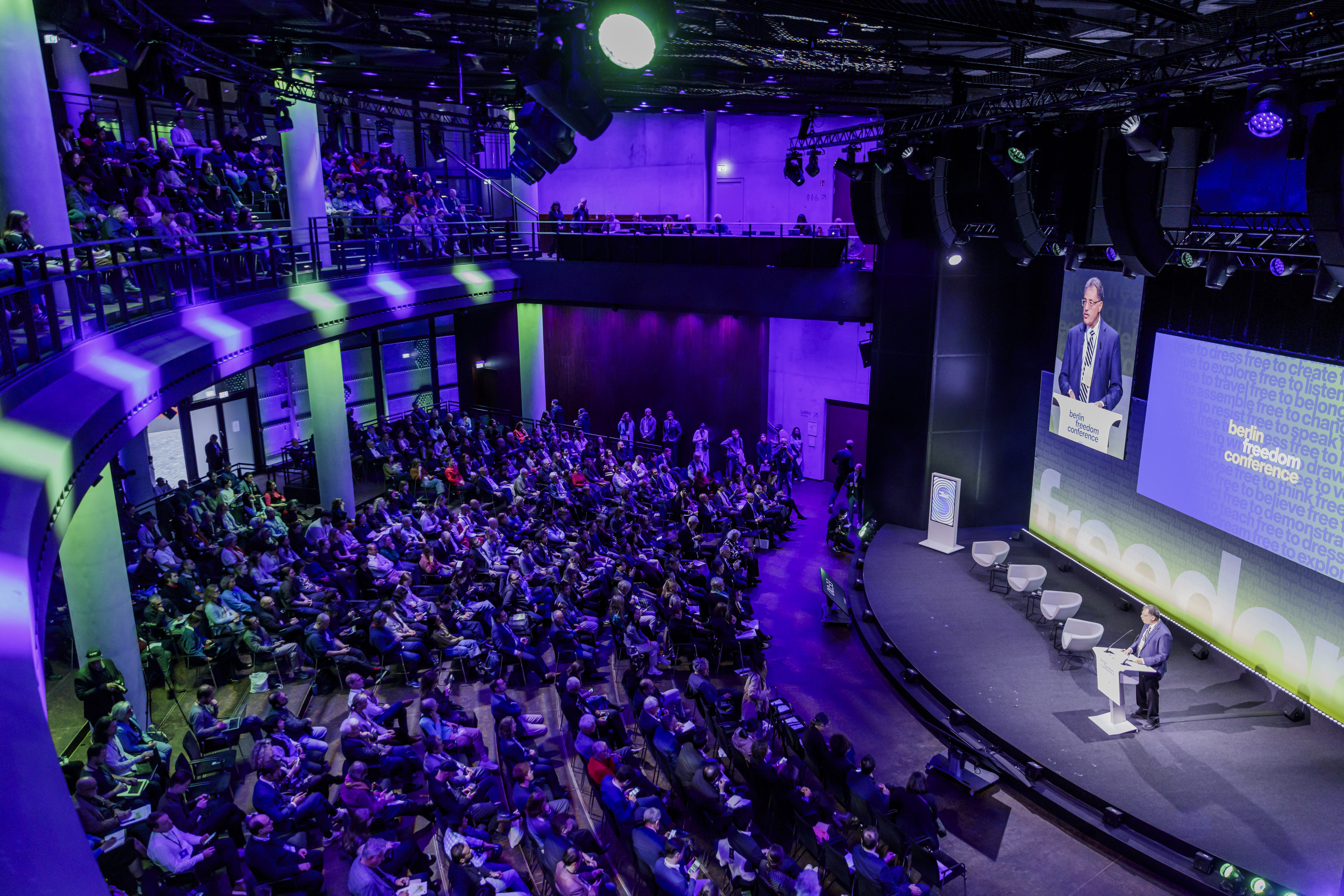
Berlin’s sustainable meetings and events strategy is driven by Sustainable Berlin and the Berlin Convention Office. Event planners can access certified partners, practical guidance, and advisory services for organising more sustainable conferences, congresses, and events. Sustainable Berlin’s GSTC-recognised criteria catalogue provides a common framework for assessing and improving sustainability performance across governance, environmental, social, and economic dimensions. The Berlin Congress Fund further links public funding for events to sustainability performance through the Sustainable Event Scorecard. This gives planners a practical tool to structure sustainability measures and check whether their event meets funding requirements. Additional resources, including CO₂ calculation, best-practice guidance, and expert advice, help translate sustainability ambitions into operational planning. Berlin is also strengthening the legacy and impact dimension of events. The Berlin Impact Programme supports organisers in designing events with measurable positive effects, while the Berlin Paper 2025 sets out an action plan to position Berlin by 2035 as a leading metropolis for sustainable, inclusive, and innovative major events. Developed collaboratively with stakeholders from politics, business, tourism, events, and civil society, these initiatives reinforce Berlin’s ambition to combine event excellence with long-term value for the city.
63%
OF HOTEL ROOMS
SUSTAINABILITY
CERTIFIED
70%
OF VENUES
SUSTAINABILITY
CERTIFIED
40%
OF PCOS/DMCS
SUSTAINABILITY
CERTIFIED
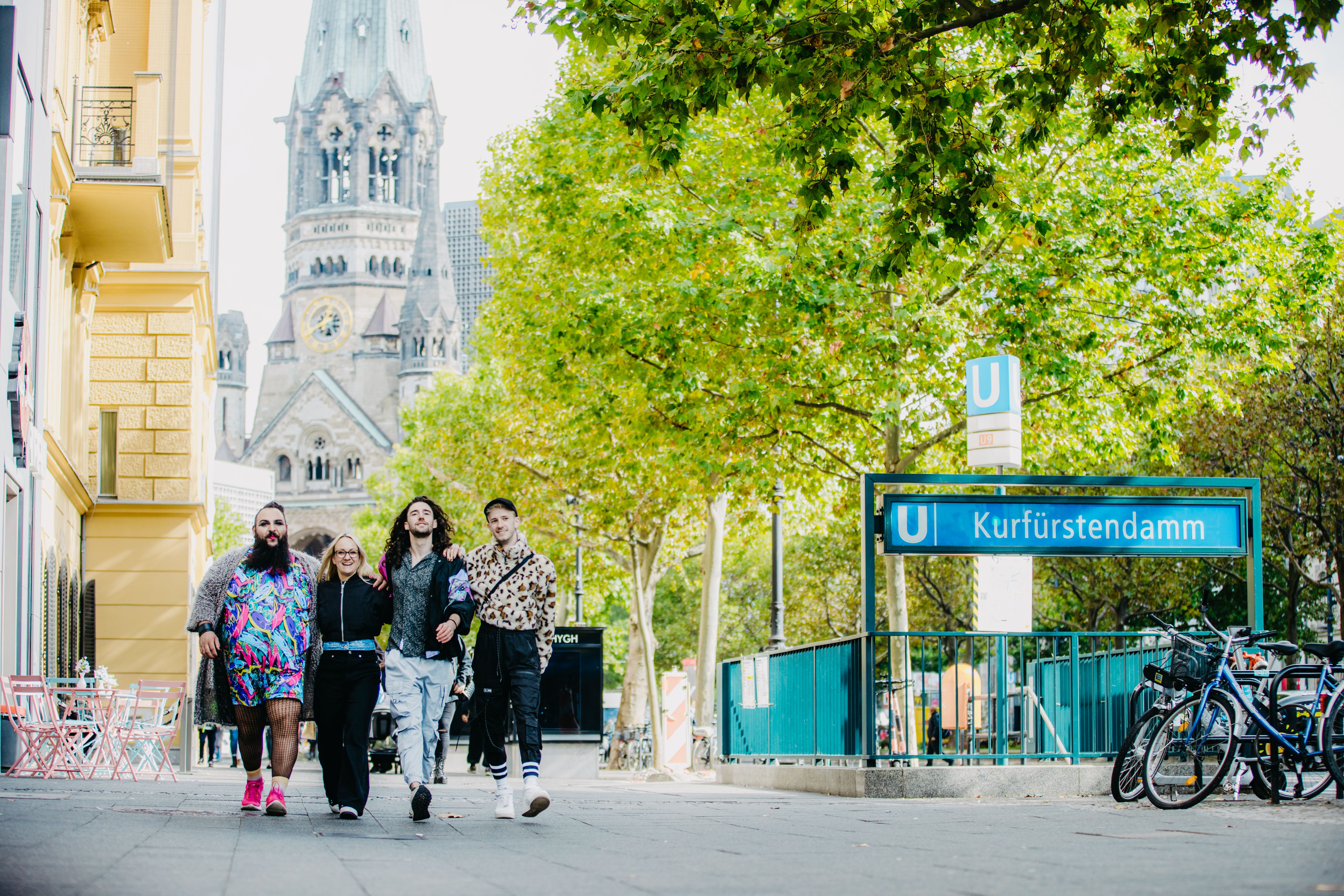
Berlin is a diverse, inclusive, and socially progressive city whose tourism development is closely linked to accessibility, participation, local value creation, and democratic values. visitBerlin supports an accessible tourism service chain so that visitors with different needs can experience the city as independently as possible. Accessibility is treated as a future task for tourism that benefits not only people with disabilities, but also older travellers, families, and many other groups. In 2025, Berlin placed a strong focus on inclusive tourism around the Global Disability Summit, presenting accessible offers together with best-practice partners and launching new communication formats such as “Berlin barrierefrei erleben”. The city also continued to develop accessible information, stakeholder exchange, and awareness-building for tourism partners. Beyond accessibility, Berlin uses tourism and events to generate social impact. Formats such as MEET+CHANGE connect professional meetings with social and cultural organisations, while the Berlin Impact Programme supports event planners in creating measurable positive impact. These initiatives reflect Berlin’s broader commitment to SDG-oriented destination development, tolerance, participation, and a visitor economy that contributes positively to the city and its communities.